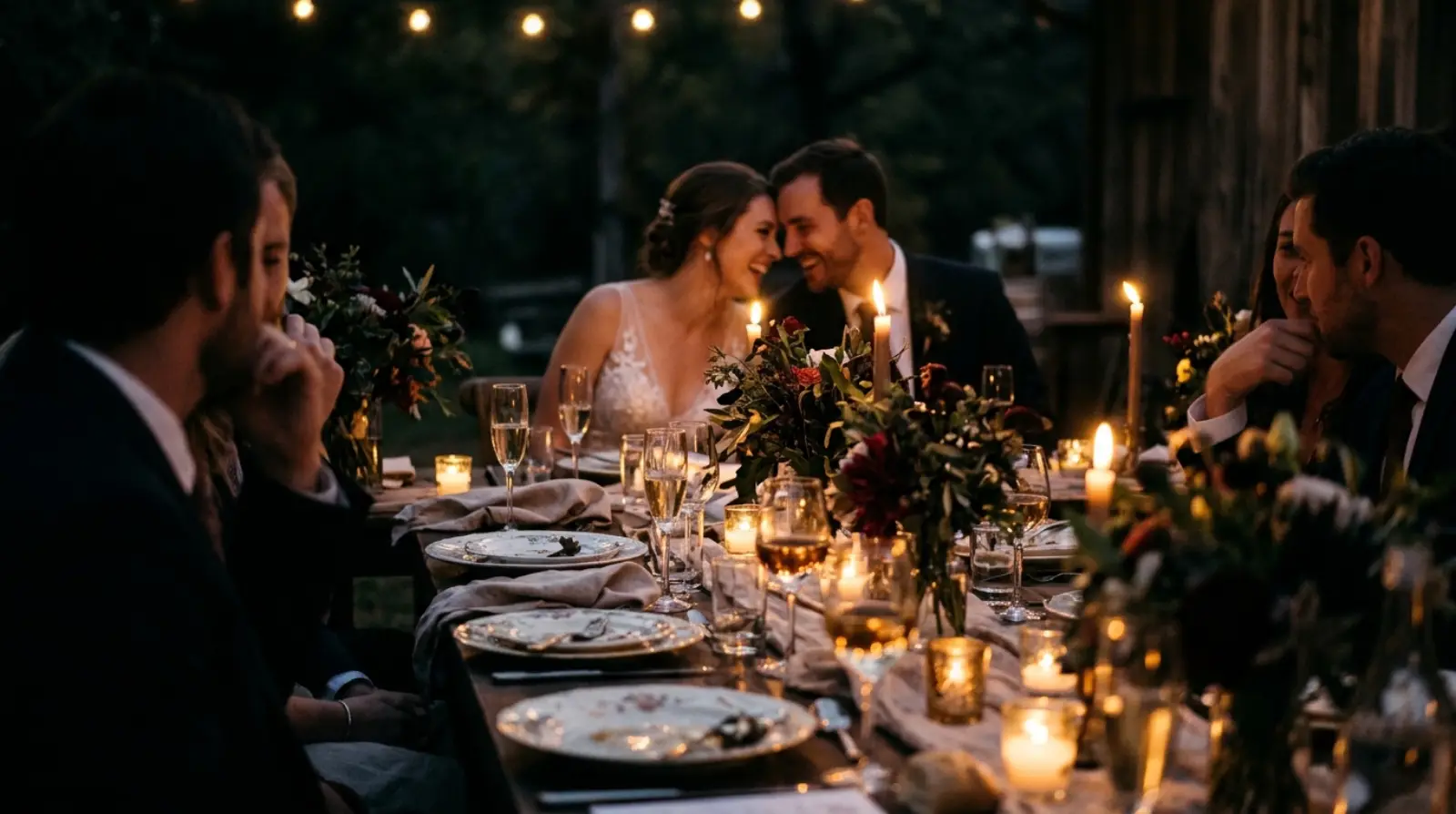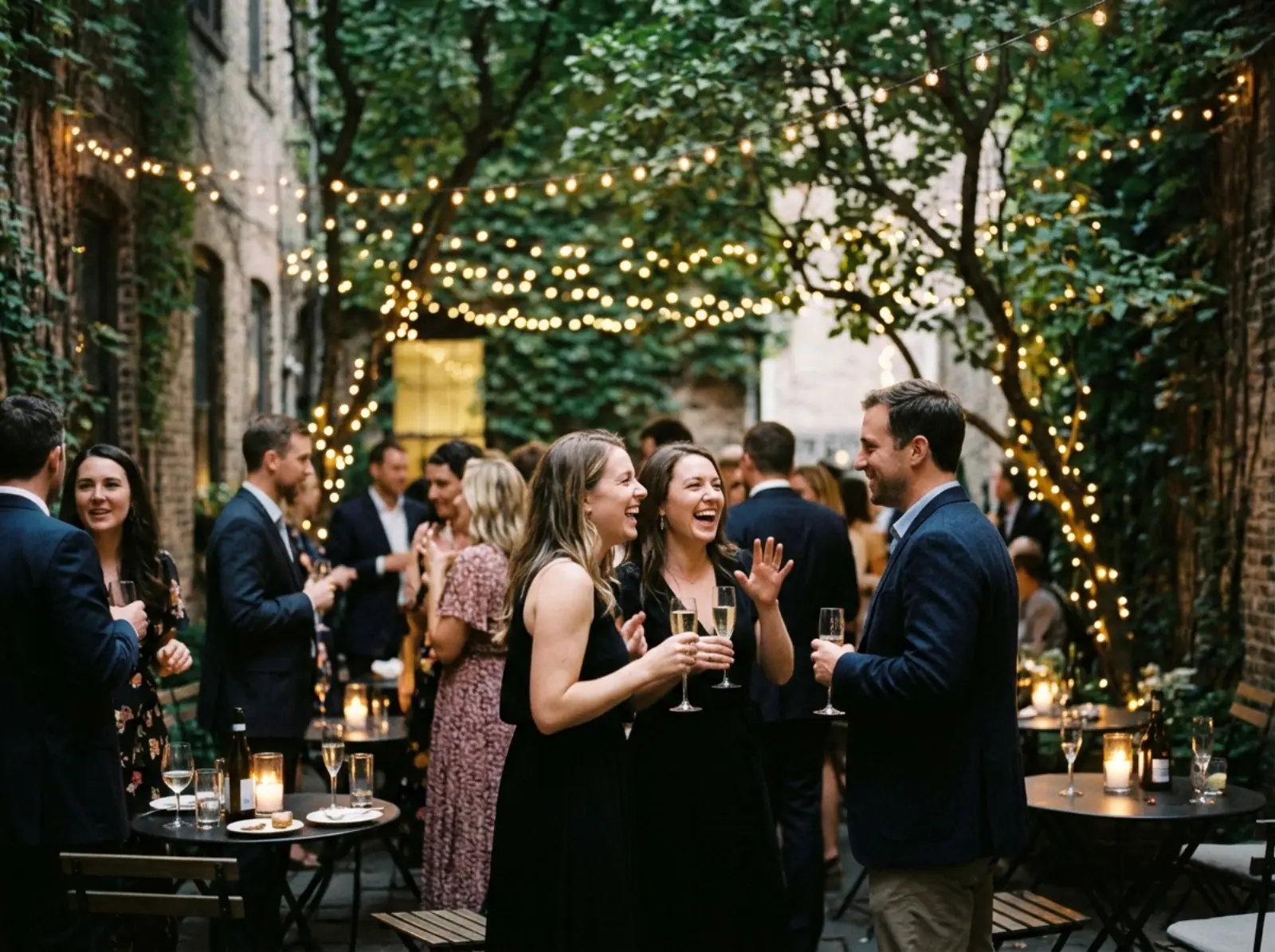
Before
Tell us what kind of night it is.
A wedding, a fortieth, a leaving do. We build the run of show around it — the moments, and what is worth catching at each one. Rewrite any of it.
Your guests already have the cameras. What they don’t have is someone telling them where to point them.
A wedding, a fortieth, a leaving do. We build the run of show around it — the moments, and what is worth catching at each one. Rewrite any of it.
A guest scans the code and is asked one thing, at the moment it matters. Everyone, a few people each time, or only the ones you pick — your call.
Not three thousand files and a date. Moment by moment, who was asked, who delivered, and every photograph of you that anyone took.
The Bennett Wedding · 5 moments
Each moment goes out on its own, to a few phones in the room. Nobody downloads anything. This is what comes back.
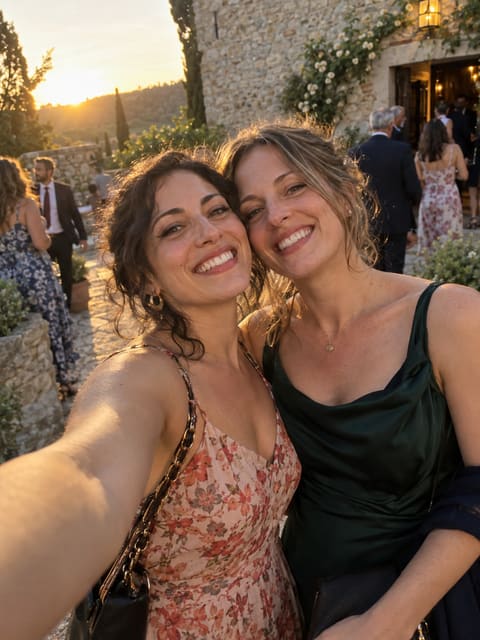
 Amelia
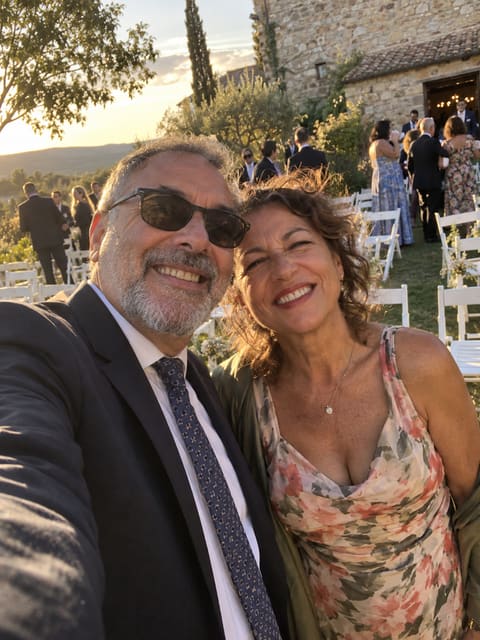
 Oliver
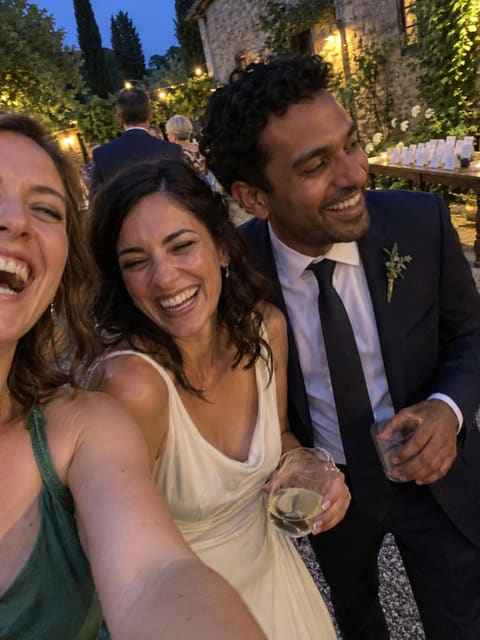
 Grace
Guests are matched to their own face once, from one selfie. At the end they open the album and the photographs they are in are the first thing on it — including the ones taken by people they never spoke to.

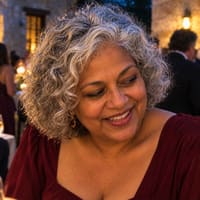
 1,240 frames · the 38 you are in
A moment can ask for a voice note or a written line instead. The speeches come back as the room heard them, and the album names the longest message of the night.
Three days later somebody empties their camera roll into it. Each photograph carries the time it was taken, so each one lands in the moment it belongs to — the 21:14 frame files itself under the first dance, beside the three that were asked for.
The run of show moves when you say so. Start a moment late, skip one, add a question nobody planned — from the phone in your hand, while the thing is happening. Nothing needs setting up on the night.
A disposable-camera app gives every guest a shutter and hopes. None of the four above are things a shutter can do — they are what happens when the night knows what is running and who was asked.
Open one and the run of show is already there — the moments, in order, at the hours they usually happen, with the prompts that go out at each. Move any of it, rename any of it, throw half of it away.
Because every picture came from a question, the album can say what happened rather than just show it. Three people were asked to shoot the first dance from three places, and all three did — so the three frames become one thing nobody had to think about.
Someone’s uncle recorded a minute and forty-eight seconds. The busiest ten minutes of the night were at 23:40. None of that is guessed — it is read back off what was asked.
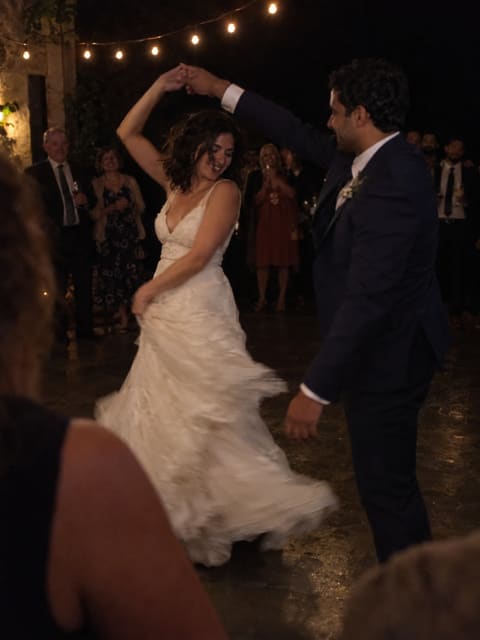 Grace
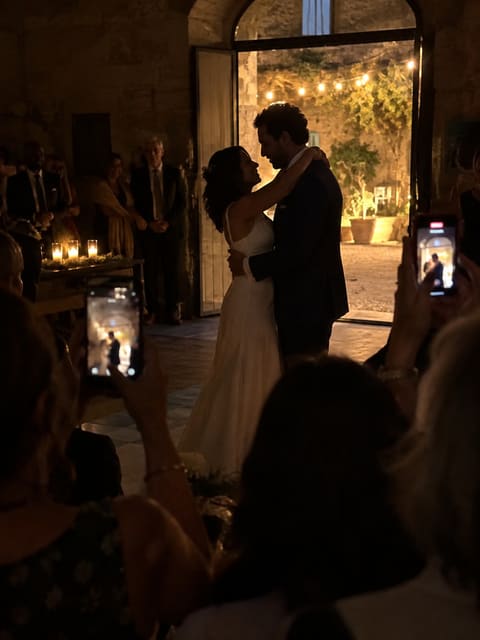 Alice
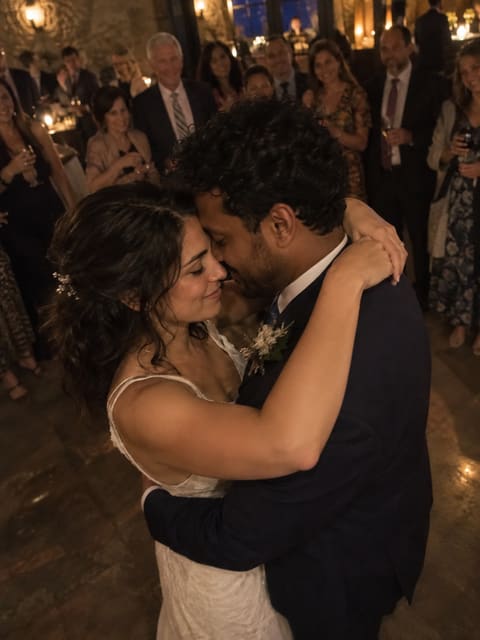 Theo
Every line of it comes out of what was asked and what came back, so it names people instead of counting them. Nothing is written by a model, and nothing is invented — if the after-party never happened, it says nothing about the after-party.
Everyone who was there gets the link. Everyone finds the photographs of themselves without scrolling through three thousand.
Tap for sound
Cut in the order the night ran — the arrival, the ceremony, the first dance, whatever was still going at two — with the voice notes your guests left playing underneath it. Vertical, because it is going to be watched on a phone and every photograph in it was taken on one.
It waits for you. When you are sure nothing else is still arriving, you press one button on your album and it is made from everything that came back. Nobody edits it and nothing is invented.
This one is real — a wedding, its own photographs, built by the same thing that will build yours. It is in every band, including the smallest.
That is not a failure of yours. You will be moved from one thing to the next all night, and the parts you will want back are the ones that happened in the corners while you were somewhere else — the friend who cried at the speech, the two people who met at your table, your father when he thought nobody was looking.
Everyone standing in those corners had a camera in their hand. None of them will ever send you the photograph. This is how you get it anyway.